News
Week in Review - Click, Watch, Read
April 8, 2011 | ELIXHER
GBM News Countdown: 15 Most Powerful Gay Celebrities Of Color
Recently, MSN TV posted their “Countdown: 15 Most Powerful Gay Celebrities” slideshow list online, as a way of highlighting the progress of the LGBT community in contemporary society. Yet, as … Read More
Wanna See a Safer Brooklyn? Here’s How!
April 7, 2011 | ELIXHER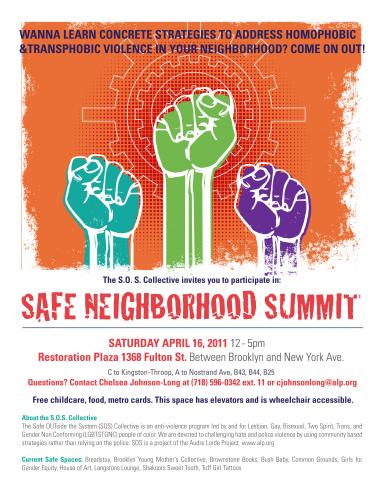
How many times have you heard “Hey baby” or “Smile beautiful”? Had the words “faggot” or “dyke” pierce your ears while embracing your partner in public? Or feared for your safety when you ignored or challenged someone’s advances? I’ve lost … Read More
"I’m Not Homophobic But…" and Other Things Homophobic People Say, Think and Do
April 6, 2011 | ELIXHER 4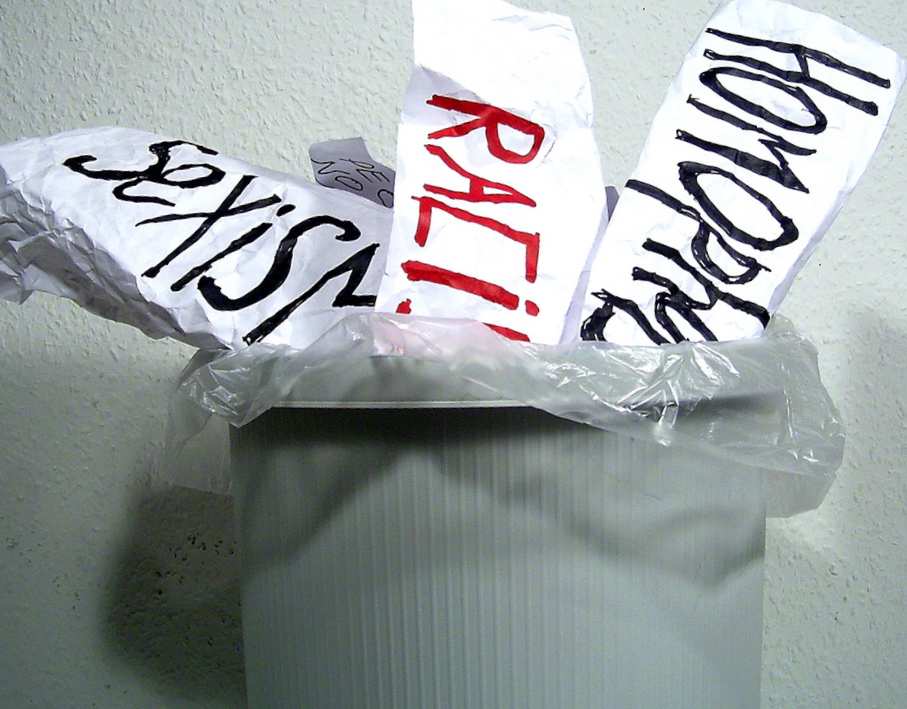
I just don’t wanna see that shit in public. Don’t bring that around my kids. You don’t have to be so flamboyant.I don’t want gay people anywhere near me. That’s just nasty. I don’t want no gay person touching me. … Read More
The Brown Boi Project: Creating Dialogue About Race, Gender and Privilege
April 5, 2011 | ELIXHER 1
The Brown Boi Project Spring 2010 Cohort
We typically don’t discuss privilege when we’re talking about historically marginalized groups. But that’s precisely the conversation B. Cole, founder of the Brown Boi Project (BBP), a leadership development and organizing project for young leaders, is aiming to have. “People ask why focus on that little place where they have privilege,” she says. “My argument is that little place where you have privilege is incredibly powerful.”
One of the guiding principles of the Brown Boi Project is that individuals can bring more social change in areas where they have power than in areas they don’t. Sounds logical, but what does that mean for “brown bois” (men and masculine-presenting women of color)? “It means that I can actually do a lot to shift misogyny and sexism because I have access to masculine privilege,” Cole, who identifies as “masculine of center,” explains.
In 2008, Cole coined “masculine of center” (MOC), a term that “recognizes the breadth and depth of identity for lesbian/queer womyn who tilt toward the masculine side of the gender scale and includes a wide range of identities such as butch, stud, aggressive/AG, macha, dom, etc.” Masculine of center womyn, along with trans men, queer men and straight men of color are the four groups BBP targets.
These populations all have similar statistics in terms of high unemployment, incarceration and high school drop out rates. Cole saw a need for capacity-building in each of those communities. The similar “life path” and limited opportunities are what led the BBP director to create a space for conversation—a conversation that delves into constructs of gender identity and race in everyday terms.
The Brown Boi Project recruits fourteen to sixteen leaders (age 35 and under) from around the country for a five-day training retreat where they learn communications, personal finance, community organizing, conflict resolution, fundraising, relationship building, gender justice, and personal life planning. Each member also receives a life coach. In the past they’ve had everyone from aspiring clothing designers to executive directors of organizations to butchers join the cohorts.
Week in Review - Click, Watch, Read
April 1, 2011 | ELIXHER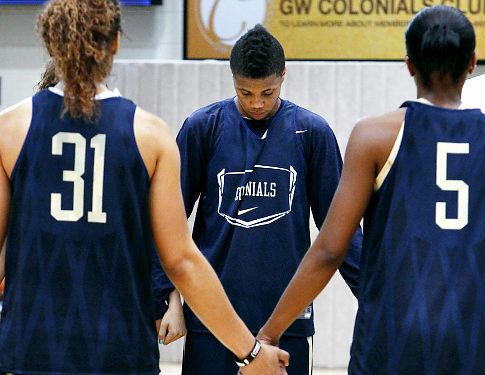
Concussions Mar Season for GW Transgender Player
At the start of the season, Kye Allums was one of a kind — an openly transgender member of the George Washington women’s basketball team. It wasn’t long before he became someone with … Read More
Bisexual Invisibility and Its Impact
March 31, 2011 | ELIXHER 3
Two of the most prevalent stereotypes associated with bisexuals are that they’re promiscuous and indecisive. Not only are these stereotypes distortions that fuel biphobia, but the San Francisco Human Rights Commission also approved an eye-opening report that confirms bisexual invisibility has serious consequences on bisexuals’ health and economic well-being.
Many people don’t realize that being bisexual doesn’t necessarily mean randomly “switching sides.“ Being bisexual can mean identifying primarily as gay for long periods of time or identifying primarily as straight for long periods of time. It can also mean favoring one sex more than the other. Being bisexual is not merely a “phase” of experimentation that is en route to a gay or lesbian orientation.
Bisexuality is the capacity for emotional, romantic, and/or physical attraction to more than one sex or gender. A bisexual orientation speaks to the potential for, but not requirement of, involvement with more than one sex/gender. (Source)
Although many lesbians have had relationships with men at some point in their lives, being bisexual continues to carry a stigma. There is the persistent fear that a bisexual woman could at any point dump her lesbian partner for a penis. As a result, bisexual women often feel ostracized from both heterosexual and lesbian communities, leaving them more at risk for suicide, poverty and more.
Bed-Stuy Pride: Celebrating Self and Community
March 29, 2011 | ELIXHER 3
For decades, Bedford-Stuyvesant (more commonly known as Bed-Stuy) has been a cultural hub for Brooklyn’s Black population. While White faces trickle into the neighborhood and quaint coffee shops and wine bars pop up along the brownstone-lined blocks, one thing that has always been here and will remain is its Black queer community.
“There’s a misconception in Bed-Stuy that queer folks are gentrifiers, which is completely untrue,” explains Chelsea Johnson-Long, coordinator for a program of the Audre Lorde Project called the Safe OUTside the System Collective (SOS). “There are plenty of queer people who grew up in Bed-Stuy,” she adds. This is one of the many myths SOS, an anti-violence program that operates and serves lesbian, gay, bisexual, two-spirit, trans and gender non-conforming (LGBTSTGNC) people of color in central-Brooklyn, seeks to dispel with Bed-Stuy Pride.
Bed-Stuy Pride, slated to launch early August, is also an effort to address the harassment that often occurs against LGBTSTGNC people in Bed-Stuy. “Our community members experience a particular kind of violence here,” Johnson-Long explains. “Not just violence because of their sexual identity but also because of their race.”
Often individuals don’t feel safe walking home at night or publicly holding hands with their partner out of the fear of being taunted or physically harmed. This violence is not only from community members, but also from police officers. Transwomen are sometimes stopped and frisked by cops because it is assumed that they’re sex workers. Johnson-Long believes that it is becoming normalized to these every day acts of violence that leads to more heinous hate crimes like murder. “To affect that kind of stuff, you really have to affect the culture of the space,” says the SOS coordinator.



Recent Comments
- What Lawrenceville School's Maya Peterson Teaches Us About "Reverse Racism" (1)
 { I agree with all that she has done. The attackers are not going to be investigated because the school is one, playing politics, and two... } – Jul 07, 10:14 AM
- LGBTQ Self-Identified Women of Color: Are We Whole? (3)
 { You are lovely! Thank you for your thoughts. Taking care of ourselves is so very important. Drinking one BIG glass of water in the morning... } – Jul 03, 1:40 AM
 { Hello Nicole! I want to thank you so so much for this article! It really resonates with me and pretty much sums up my life.... } – Jun 30, 1:57 PM
 { Thank you so much, Nicole, for sharing this beautiful article. It helps to have reminders, especially from my LGBTQ black community. I am finding greater... } – Jun 30, 1:26 PM
- A Love Letter to Studs and Bois (39)
 { This letter really touched my heart.Because it is hard being a stud..And u my friend have sum it all up..Thank u for appreciating us,for understanding... } – Jul 02, 10:38 AM
- Older »