





What You Missed This Week


A roundup of this week’s top Black LGBT stories (11/16/13-11/22/13).
238 Trans People Murdered Worldwide In The Past Year
Brazil and Mexico lead the list for the most reported killings of trans people in the past year, according to a report released Wednesday by Transgender Europe’s Trans Murder Monitoring project. The report was released in anticipation of the 15th International Transgender Day of Remembrance, which will be observed on Nov. 20, 2013. The report only includes murders of trans people that can be documented through publicly available information or are reported by local advocacy organizations, and so may not be a complete picture of the scope of crimes committed worldwide. But the map suggests even countries where rights for gays and lesbians have made huge gains remain dangerous places for trans people.
Continue reading on Buzzfeed.

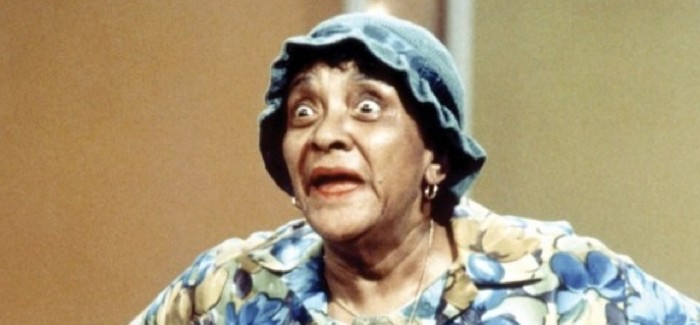
Moms Mabley
An Overdue Look at the Comedy of Moms Mabley
Even as a young woman, she was working her Moms act. But Moms was purely a persona. Behind the housecoat, Mabley was a lesbian who made no secret of her sexuality. In the documentary we see private photos of Mabley looking natty in men’s suits and slicked-down hair. On stage she joked about fancying younger men, but she usually had a young gal on her arm.
Read more at the Boston Globe.
WATCH: Julia Wallace for the Many Voices Video Campaign
The Many Voices Video Campaign Illuminates the powerful presence of Black Gay and Transgender Christians within The Church. This edition features Julia Wallace, Co-Founder of the Mobile Homecoming Project. Julia grew up in a family full of preachers and while she was embraced by her father, also a preacher, she often experienced homophobic and transphobic messaging from her family and church. She discusses how she navigated through those experiences to claim and pursue her own unique purpose in life.
Julia Wallace for the Many Voices Video Campaign from Many Voices on Vimeo.
Fair Employment Practices: A Broken Bargain for LGBT Workers of Color
Sharon Lettman-Hicks, executive director of the National Black Justice Coalition, discusses key findings from a new report:
In my years as an advocate for racial equality, I’ve heard countless stories from black men, women, and youth about barriers faced in school, college, finding a job, keeping a job, and being treated equally in the workplace. Despite laws that promote equal access to employment and protect workers from unfair practices, black workers can be subjected to hiring bias, unequal pay, and discrimination. We’ve worked tirelessly to enforce workplace protections so that all black people can have a fair shot at getting ahead. Now, those laws aren’t perfect, but imagine if we didn’t have them.
Continue reading on The Huffington Post.
Living as a Black Lesbian in Rural North Carolina
Latoya Eaves, a graduate student [at the University of Connecticut], gave a brief lecture on her dissertation at the [university's] Rainbow Center. She was very passionate about American ignorance to black lesbian literature and the hedging of queer scholarship by way of heteronormitivity. This prompted her exploration of such an unneeded social constraint, as well as the Southern area and nature of “space” black lesbians reside within.
Read what she found here.

Wagatwe Wanjuki
White Hats Off: Feministing Writers Deconstruct the Scandal Rape Scene
Last week’s episode of Scandal, ”Everything’s Coming Up Mellie,” has gotten a lot of attention for its depiction of a rape involving Mellie Grant and her father in law, Big Jerry. The Feministing crew had a lot of thoughts on the rape scene itself as well as some of the larger issues it raises around depictions and tropes of sexual assault in mainstream media: “I am definitely disappointed in using rape as a way to “explain” why a woman is manipulative/a bitch/etc.,” writes guest contributor Wagatwe Wanjuki.
Read the full discussion at Feministing.



Recent Comments
- WATCH: Maya Peterson Talks to Melissa Harris-Perry (2)
 { Hi Nedrea, you can read the full letter here: http://time.com/2950998/an-open-letter-to-maya-peterson-on-the-politics-of-humor/. - ELIXHER Editorial Team } – Jul 09, 11:21 AM
 { I would love to see the remainder of that letter, because I feel like Alexis Wilkinson has missed the entire point of what Maya did. } – Jul 08, 11:34 AM
- LGBTQ Self-Identified Women of Color: Are We Whole? (6)
- { Peace & Love Anastasia! I hope you're feeling loved and abundant! Thank YOU! for your warm, peace words. I am beyond grateful that you were... } – Jul 08, 9:15 PM
- { Peace & Love Holly! I hope you are feeling amazing! Thank you so so much for your loving words. I am full of gratitude that... } – Jul 08, 9:10 PM
- { Peace & Love Tami! I hope this finds you well! Thank you so much for your warm, positive words AND the ohhh so important tip/reminder... } – Jul 08, 9:05 PM
- Older »





Submit a Comment