





Herstory in the (Film)Making

The work of filmmakers Cheryl Dunye and Yvonne Welbon has created an unprecedented level of visibility and access for queer women of color – particularly Black lesbians – in cinema. The movies and archives they’ve produced required major investments of time, energy, and money despite being often overlooked by mainstream media. However, those efforts broke new ground for queer women of color filmmakers.
 Both Welbon and Dunye are being considered for the Tribeca Film Institute Affinity Grant for African American filmmakers breaking ground in their field of media. The recipient will be selected based upon the results of public online voting. It is exciting to have not one but two lesbian filmmakers to support in the selection process. Supporters can vote twice daily for as many filmmakers as they choose. You can vote here.
In case you’re unfamiliar with their work or simply want to reflect on the rich herstory in filmmaking, here are some highlights of Dunye’s and Welbon’s most salient accomplishments to date and their impact of the queer women of color community.
The release of The Watermelon Woman was a watershed mark in Black lesbian cinema as it was the first full-length feature directed by an African American lesbian. It was theatrically released and distributed by First Run Films in 1996. Almost twenty years later, the film continues to inspire Black lesbian filmmakers such as Tiona McClodden (black./womyn.:conversations with lesbians of African descent) and Nekisa Cooper and Dee Rees (Pariah).
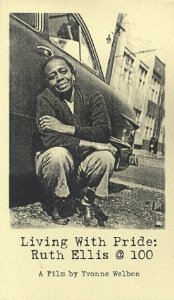 In 1999, Yvonne Welbon released and self-distributed Living With Pride – Ruth Ellis @ 100. Like The Watermelon Women, the film provides a historical context to Black lesbian life in the United States. The film won 10 “Best Documentary” awards in film festivals across the globe.
Stranger Inside was Dunye’s second film. Financed by HBO, it aired in June of 2001 and reached a larger audience in one evening than The Watermelon Woman did in one year of festival release. With its clean-cut photography and linear narrative, it made an overtly Black lesbian film accessible to the general American public.
Sisters In Cinema, both the website and the 2003 documentary, make a bold proclamation: Black woman filmmakers exist and are relevant. It allows the public to see, often for the first time, the breadth of film created by this community. Her site lists hundreds of films, and continues to inspire African American women, such as Ave Duvernay (AFFRM) and myself, who are passionate about building a community centered around cinema.
After you’ve voted for Dunye and Welbon, visit Sistah Sinema - Online, a queer women of color video-on-demand channel, for instant access to an array of QWOC films. For this week, and this week only, net proceeds go to ELIXHER’s Indiegogo campaign.
- Isis Asare
Isis Asare is the founder of Sistah Sinema, a monthly event hosted in various cities screening queer women of color (QWOC) cinema. Asare recently launched Sistah Sinema - Online, a queer women of color (QWOC) video-on-demand channel on BuskFilms.com.



Recent Comments
- LGBTQ Self-Identified Women of Color: Are We Whole? (3)
 { You are lovely! Thank you for your thoughts. Taking care of ourselves is so very important. Drinking one BIG glass of water in the morning... } – Jul 03, 1:40 AM
 { Hello Nicole! I want to thank you so so much for this article! It really resonates with me and pretty much sums up my life.... } – Jun 30, 1:57 PM
 { Thank you so much, Nicole, for sharing this beautiful article. It helps to have reminders, especially from my LGBTQ black community. I am finding greater... } – Jun 30, 1:26 PM
- A Love Letter to Studs and Bois (39)
 { This letter really touched my heart.Because it is hard being a stud..And u my friend have sum it all up..Thank u for appreciating us,for understanding... } – Jul 02, 10:38 AM
- My Mom Told Me She Was Gay (4)
 { Love this <3 } – Jun 19, 9:27 PM
- Older »






Submit a Comment