





New York Times Takes Harrowing Look at ‘Corrective Rape’


[trigger warning: rape and sexual violence]
“According to a 2009 government survey, one in four men admit to having sex with a woman who did not consent to intercourse, and nearly half of these men admitted to raping more than once. An earlier government study found that a majority of rapes were committed by friends and acquaintances of the victim.”, reports Clare Carter in a recent NYT Opinion Page article. “ Just as disturbing is a practice called “corrective rape” — the rape of gay men and lesbians to “cure” them of their sexual orientation.”

The piece, published on July 27th, 2013, entitled “The Brutality of Corrective Rape” is a haunting and gut-wrenching exposé on the commonality of sexual assault being used and justified as a deterrent of LGBTQI lifestyles in South Africa. In the wake of years of apartheid, in their 1996 Constitution, the country took determined steps toward securing equality for the entire nation. Unfortunately, the implementation of law has never been able to eliminate a lifetime of ingrained biases and hatred. If we have learned anything from history, it is that the extension of formal legal protections (though necessary and progressive actions) amplify some people’s worst homophobic/racist/sexist inclinations, which often leads to aggression and violence against the affiliated population; in this instance lesbian, gay, bisexual and transgender people.
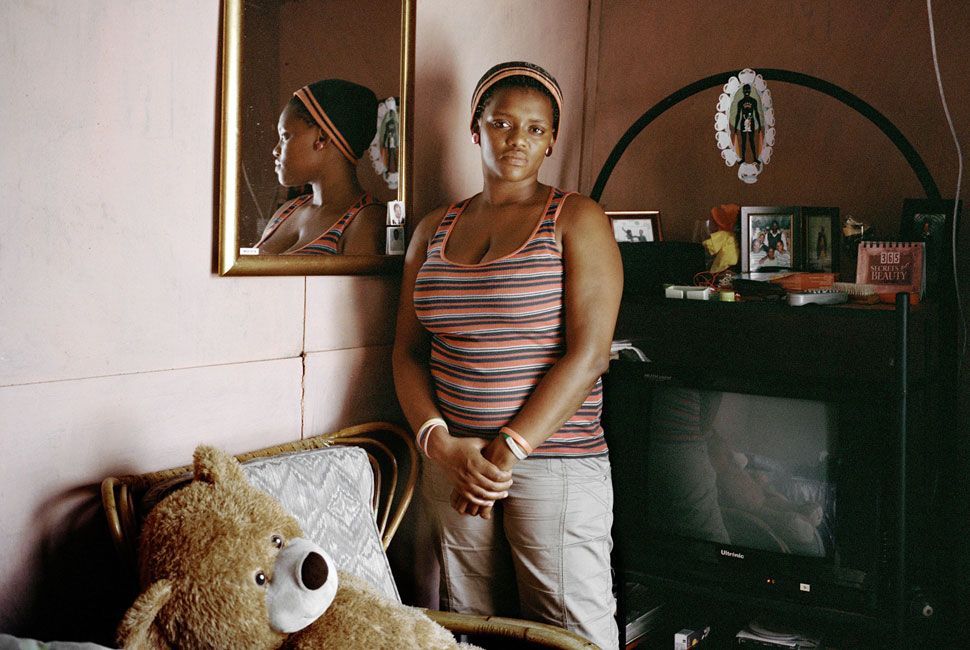
Carter traveled to various townships to document survivors and interview both lesbian and gay South Africans victims and their perpetrators number about their experiences as they related to their community, families, and personal identity. The tales that are yielded pulsate with injustice, cruelty, ignorance, and above all a hatred that only reminds the reader that just because their tales are not gaining mass media coverage, does not mean that they are not worthy of reporting.
In a quote from Funeka Soldaat, a founder of Free Gender, a black lesbian activist group based outside of Cape Town, described to Carter an atmosphere of pervasive fear: “It’s as if you are sitting like a time bomb. You don’t know when it’s going to explode. You are just waiting for it to be your turn. And you won’t get any support from the community, as the community thinks homosexuality is un-African. Homophobia is going to take time to go away, if it ever does.”
Read the article in it’s entirety at The New York Times | The Opinion Pages…

Clare Carter is a contemporary female painter, born in England, who began her Corrective Rape photography and film project when she read an article about a young South African woman named Eudy Simelane who was raped and killed because of her sexuality. Simelane was a lesbian soccer player training to be a referee for the 2010 FIFA World Cup (a variable that dubbed the incident note-worthy within the mass media circuits). Carter was especially interested in the incident because South Africa was the first African nation to outlaw discrimination based on sexual orientation and was additionally the fifth country in the world to legalize same-sex marriage. In a two-year long endeavor that earned her a runner-up commendation in the 2013 Aperture Portfolio Prize, Clare combined intimate portraiture, interviews across a number of townships with both the victims/families of victims of assault and the assailants themselves, landscapes, and snapshots of police reports to expose the underknown and yet widespread issues raised by these violent acts: gender and sexuality, urban and rural conflict, education, and justice.
 all photos courtesy of Clare Carter/Contact Press Images via New York Times, The Opinions Page



Recent Comments
- InspiHERed By: Red Summer (5)
 { I would like to talk to the author, Tia Williams. I am interested in the academic work that she is pursuing.
  } – Aug 02, 5:25 PM
- On Being a Hypocrite: Notes from an Apathetic Gay Girl (5)
 { Beautifully put. Thank you. That was refreshing and a bit heartbreaking. } – Aug 02, 1:49 AM
- A Love Letter to Studs and Bois (24)
 { Beautiful letter! } – Aug 01, 4:48 PM
- Balancing Acts: Being Queer in Gay and Straight Spaces (8)
- { I am 100% feeling this editorial! I am so damn tired of not fitting in anywhere...having to explain myself to everyone OR they assume that... } – Aug 01, 2:14 PM
 { I know a lot of bisexual people can relate to your experience and I'm glad you shared it. I like the term queer too when... } – Jul 31, 11:19 AM
- Older »





Submit a Comment